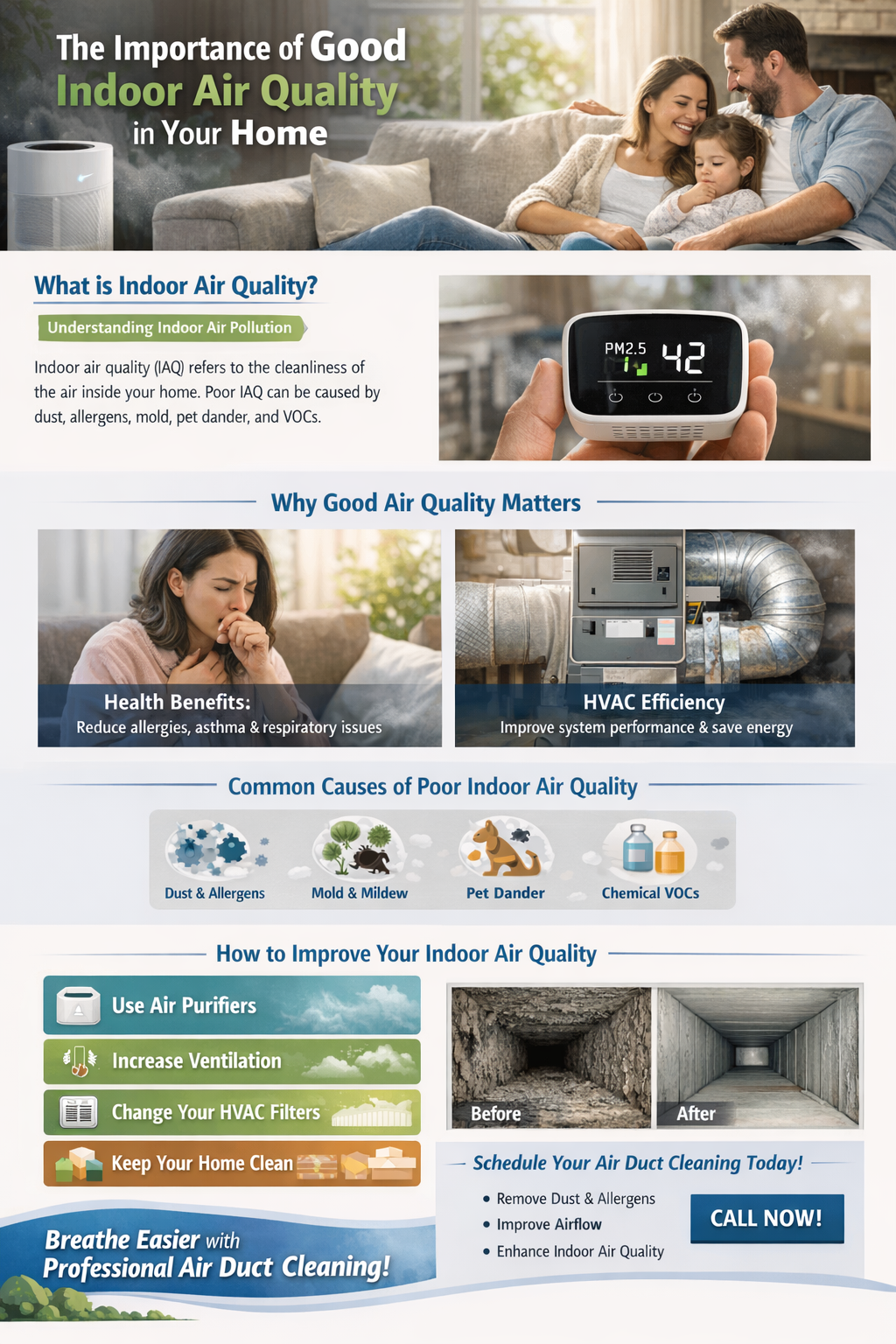
Indoor Air Quality: Why It Matters and How to Improve the Air in Your Home
ndoor air quality (IAQ) plays a critical role in your family’s health, comfort, and overall well-being. Many homeowners don’t realize that the air inside their home can be 2–5 times more polluted than outdoor air, especially when HVAC systems and ductwork are not properly maintained. Dust, allergens, mold spores, pet dander, and even bacteria can circulate through your home every day.
In this blog, we’ll explain why good indoor air quality is important, the most common indoor air pollutants, and proven ways to improve the air quality in your home.
What Is Indoor Air Quality?
Indoor air quality refers to the condition of the air inside your home, especially as it relates to the health and comfort of occupants. Poor indoor air quality can cause short-term symptoms like headaches, fatigue, coughing, and allergies, and long-term exposure may contribute to respiratory issues, asthma, and other health concerns.
Your HVAC system, ductwork, humidity levels, and cleaning habits all directly affect your indoor air quality.
Why Good Indoor Air Quality Is Important
1. Protects Your Health
Clean indoor air reduces exposure to airborne contaminants such as dust mites, pollen, mold, bacteria, and volatile organic compounds (VOCs). Poor air quality can worsen allergies, asthma, sinus issues, and other respiratory conditions—especially for children and seniors.
2. Improves HVAC Efficiency
When your air ducts and HVAC system are clogged with dust and debris, your system has to work harder to circulate air. This reduces efficiency, increases energy bills, and shortens the lifespan of your equipment.
3. Reduces Odors and Moisture Problems
Stale odors, musty smells, and excess humidity are often signs of poor air circulation or contaminated ductwork. Improving indoor air quality helps eliminate lingering odors and prevents mold growth.
4. Creates a Cleaner Home
Cleaner air means less dust settling on furniture, floors, and surfaces. This makes your home easier to clean and more comfortable to live in.
Common Causes of Poor Indoor Air Quality
Understanding what affects your indoor air quality is the first step toward improving it:
Dirty air ducts and HVAC systems
Dust, pollen, and pet dander buildup
Mold growth inside ductwork or vents
Poor ventilation
High humidity levels
Dirty air filters
Smoke, chemicals, and household cleaners
If your home hasn’t had professional air duct cleaning in several years, contaminants may be circulating every time your system turns on.
How to Improve Indoor Air Quality in Your Home
1. Schedule Professional Air Duct Cleaning
One of the most effective ways to improve indoor air quality is professional air duct cleaning. Over time, dust, debris, allergens, and mold can accumulate inside your ductwork and spread throughout your home.
Benefits of air duct cleaning include:
Cleaner, healthier air
Reduced allergens and irritants
Improved HVAC efficiency
Less dust in your home
Homeowners in Knoxville and surrounding areas should consider duct cleaning every 3–5 years, or more often if you have pets, allergies, or recent renovations.
2. Clean or Replace HVAC Air Filters Regularly
Your HVAC air filter traps dust and airborne particles before they circulate through your home. A dirty filter restricts airflow and reduces air quality.
Tip: Replace standard filters every 1–3 months, depending on usage and household conditions.
3. Control Humidity Levels
High humidity can lead to mold growth, while low humidity can cause dry air and irritation. Keeping indoor humidity between 30% and 50% helps maintain healthy air quality.
Using dehumidifiers, proper ventilation, and regular HVAC maintenance can help control moisture levels.
4. Improve Ventilation
Proper ventilation helps remove stale air and bring in fresh air. Use exhaust fans in kitchens and bathrooms, open windows when weather allows, and ensure your HVAC system is properly balanced.
5. Seal and Repair Ductwork
Leaky or damaged ductwork can pull in dust, insulation particles, and contaminants from attics or crawl spaces. Ductwork repair or replacement helps prevent pollutants from entering your air system and improves overall efficiency.
6. Reduce Indoor Pollutants
Vacuum with a HEPA filter
Avoid smoking indoors
Use natural or low-VOC cleaning products
Keep pets groomed regularly
Wash bedding and curtains frequently
Signs You May Have Poor Indoor Air Quality
If you notice any of the following, your home may have an air quality issue:
Excessive dust buildup
Allergy flare-ups indoors
Musty or stale odors
Uneven airflow from vents
Frequent headaches or fatigue at home
Mold visible near vents or registers
These are strong indicators that your HVAC system and ductwork may need professional attention.
Breathe Cleaner Air Starting Today
Improving indoor air quality is one of the best investments you can make for your home and your health. From professional air duct cleaning to ductwork repairs and HVAC inspections, taking proactive steps can make a noticeable difference in how your home feels and functions.
If you’re ready to improve the air you breathe, contact Ducts of Knoxville for professional air duct cleaning, dryer vent cleaning, ductwork repair, and complete system inspections.
Call today or book online to schedule your indoor air quality service and start breathing cleaner, healthier air in your home.